
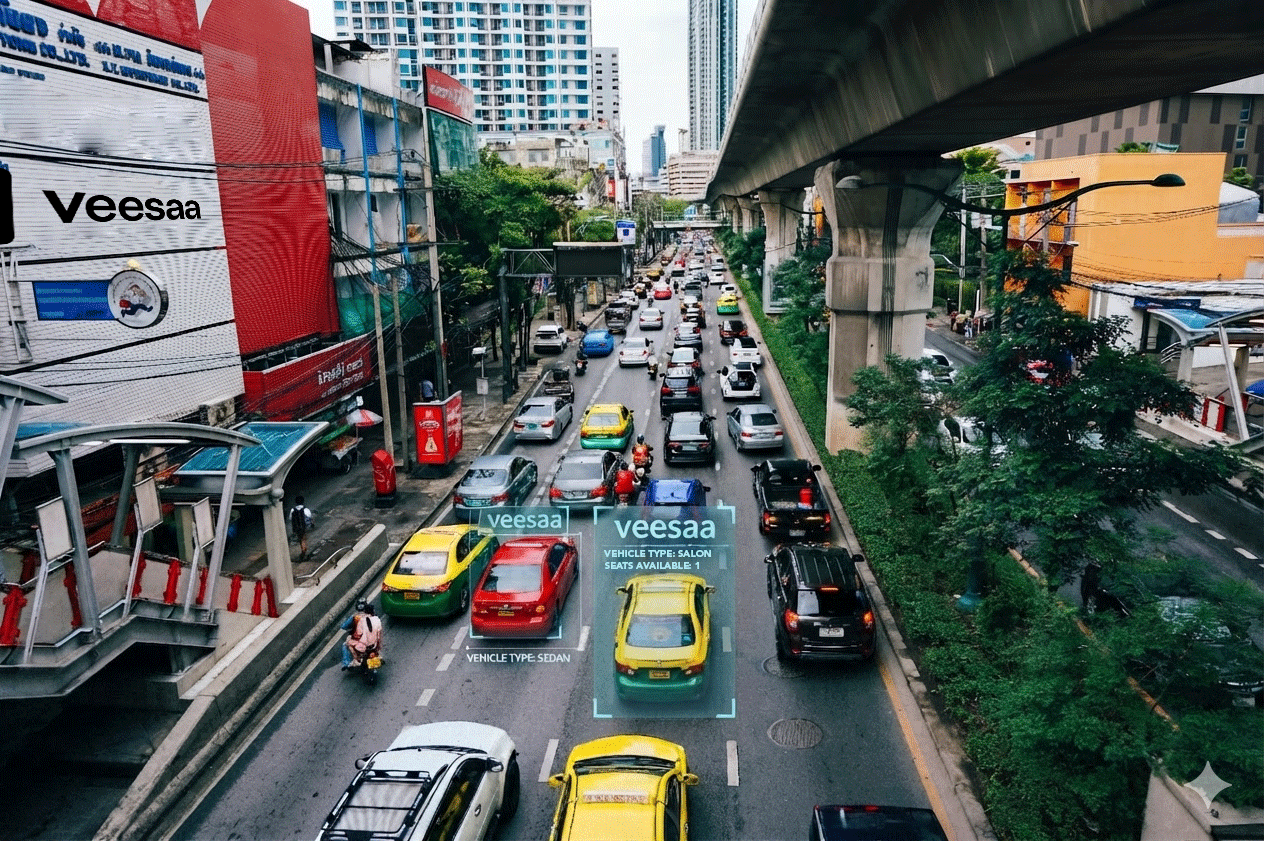
On any given service day, workday or school run, several people from the same community set off for the same place at roughly the same time. Some of them drive with empty seats. Some of them pay for a ride, or wait for transport that may not come. They know each other. They are going to the same address. They simply have no reliable way to find each other before they leave.
This is not a new observation, and it is not specific to any one country. It turns out there is careful research on it, gathered a long way from where we are building.
What the research found
Between 2023 and 2025, a project called Moving Together studied shared transport in the Hope Valley, a rural part of Derbyshire in England where public transport is limited. It was funded by Midlands Connect and Derbyshire County Council, with community research carried out by Hope Valley Climate Action. The charity CoMoUK, which supports shared transport across the UK, then compiled the findings into a practical community lift sharing guidance document.
Two findings stood out to us.
The first is that of all the forms of shared transport studied, lift sharing was the one people found most acceptable. Not car clubs, not peer to peer car rental. Sharing a lift with someone, in their car, on a journey they were making anyway.
The second is what held people back. The barriers were safety and security, social concerns, and inconvenience. And the preference, clearly stated, was for solutions that were local and community based.
Read those two findings together and they describe something quite precise. People are willing to share journeys. They are not willing to share them with strangers, and they will not fight a system to do it.
The barrier is not willingness. It is discovery.
The guidance is direct about the central problem: the major barrier to lift sharing is finding suitable travel partners.
That is worth sitting with, because it reframes what kind of problem this is. It is not a problem of persuasion. Communities do not need to be convinced that sharing a lift is sensible. It is a problem of coordination. The willingness already exists, distributed across a group of people who cannot see each other's plans.
So communities improvise. The guidance documents exactly how: WhatsApp groups, Facebook groups, noticeboards, email lists, shared spreadsheets, a Google Form feeding a spreadsheet. These work, and the guidance is refreshingly unsnobbish about them. For a small group, a well run group chat is genuinely enough.
Where the informal approach strains
The same document is honest about where those improvised systems begin to break, and the failure points are specific.
Group chats become unmanageable once there is too much traffic. The very activity that means the scheme is working is what makes it unusable, as offers, requests and arrangements pile into a single feed that everyone has to scroll.
Riders worry about getting back. The guidance lists it plainly as something passengers need: confidence that they can still get home if a lift falls through. That anxiety alone stops people accepting a lift they would otherwise be glad of.
Declining is awkward. One of the success factors is creating an environment where people feel comfortable both offering and declining lifts. In a close community, saying no to a neighbour is socially costly, and if it feels too costly, people stop offering altogether rather than face it.
And someone has to run it. The guidance recommends appointing volunteer administrators, drafting protocols, posting regular reminders, monitoring behaviour and surveying members. That is real, ongoing, unpaid work, and it depends on one committed person continuing to do it.
Then comes the line that gave us our answer. The guidance advises groups to upgrade to a more formal system once the group outgrows informal arrangements.
That sentence describes the gap we are building for.
What we are building
Veesaa is free community lift sharing. It connects people from the same closed community who are heading to the same place at the same time, so they can travel together.
The design follows the research almost line by line.
It is closed. Access is granted by a community code, issued by the community itself, whether that is a workplace, campus, estate, club or church. You are not sharing a car with strangers. That is the response to safety, security and social concerns.
It is free. Nobody pays a fare. Veesaa takes no commission, processes no payments and is not a transport operator. It is a coordination platform: it helps people who were already making the same journey find each other.
It matches instead of broadcasting. Rather than scrolling a feed, a rider sees rides passing near them, sorted by proximity, with seats, time and pickup point already stated. That is a direct answer to the discovery problem, and it is the thing a group chat structurally cannot do.
It works in both directions. You can offer or find a ride to your community, and back from it.
It keeps administration light. Seat counts, approvals, reminders and notifications happen automatically, so a scheme does not live or die by one volunteer's diligence.
To be clear about attribution: CoMoUK and Hope Valley Climate Action documented this problem carefully in a rural British context. They did not build Veesaa and have no involvement in it. We simply found their research described, with unusual precision, the same problem we had set out to solve.
Why Nigeria and Canada
The Hope Valley's version of this problem is rural isolation. Ours is different in cause and sharper in effect.
In Lagos, transport is a heavy and rising share of what people spend, and congestion turns every journey into a negotiation. The same street, the same destination, the same hour, and half the cars carrying one person. In Canadian cities the pressure shows up differently, in cost of living and in parking, but the shape of the waste is the same.
What travels between all three places is the finding underneath. Willingness to share is not the scarce resource. Trust is, and so is knowing who else is going your way. Communities supply the first. Veesaa is built to supply the second.
Veesaa is live in Nigeria and Canada, and is currently in pilot. If your workplace, campus, estate, club or congregation already coordinates lifts over a group chat, we would like to hear from you: hello@veesaa.co